www.sacredartseries.com

Thursday, March 31, 2016

11 Tips to Pray Better and More Often


Is your prayer life stuck in a rut? It's time to reconsider your habits. Developing healthy prayer habits can make all the difference. Here are some important practices and habits I've learned in recent years--I wish someone would have taught me these when I was a boy. But it's never too late to learn or develop good habits.

These are the 11 essentials that have transformed my prayer life--and could do the same for yours.

1. Go to bed on time the night before.


Morning is the best time to pray. A good 15 to 30 minutes of morning mental prayer places God first, helps you to avoid sin and practice the virtues throughout the day, and it lays the groundwork for praying without ceasing throughout the day.

There's also a chance that your house will actually be quiet in the morning, which will help.

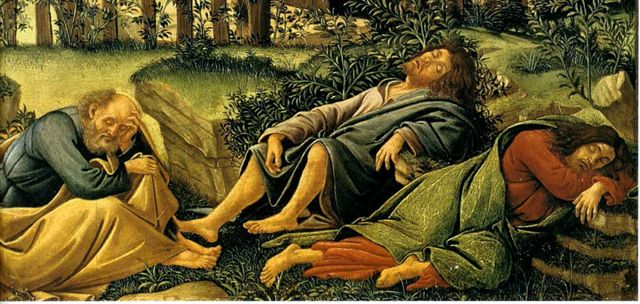
But to pray well in the morning, you'll also need to be well-rested. And this means going to bed on time the night before. (Or you'll be sleepy like these Apostles.)

2. Get up early.


Set your alarm early enough so you can have 15 to 30 minutes of quiet morning prayer. And the moment your alarm rings, get up. No excuses. No snoozing. 

Make this your very first prayer of the day: a spiritual offering to God of your sacrificed sleep.

Get up every day like this for a month and it will become a habit.

Read tips 3 through 11 at OnePeterFive.

Wednesday, March 30, 2016

Back in Stock - Large Rosary Flip Books!

The Large Rosary Flip Books have been out of stock since January, but I just received a new shipment and they're now available at Amazon. Click here to buy.

Thanks for your patience. Happy Easter!


Saturday, March 26, 2016

Hi-res Close-ups of Holy Gospels

Here are some close-up photos of the printed book The Holy Gospels of St. Luke and St. John from the Sacred Art Series. In addition to these photos, you can also view the an electronic version of the complete interior of the book!


Sunday, March 20, 2016

Palm Sunday - Gregorian Chant

Gregorian Chant is perhaps the pinnacle of sacred art as it is integral to the Holy Sacrifice of the Mass, i.e., the chants are actually part of the Mass, rather than an adornment or accessory.

Below is the Tract for the Palm Sunday Mass. The text comes from Psalm 21 and begins "Deus, Deus meus, respice in me: quare me dereliquisti?" ("My God, my God, why have you forsaken me?") These words from Psalm 21, of course, are uttered by Christ from the Cross on Good Friday, and thus make them especially apt for the Palm Sunday liturgy, which begins Holy Week and anticipates the Christ's Passion, death, and Resurrection celebrated in the Paschal Triduum beginning on Holy Thursday.


The Tract comes from the Roman Gradual, which was revised following Vatican II. This particular Tract for Palm Sunday was retained following Vatican II (as were many of the Mass Propers), so it is identical to the Tract sung on Palm Sunday at the Extraordinary Form of the Mass. Unfortunately, in the Ordinary Form of the Mass, most Catholic parishes routinely substitute the Tracts (and Graduals) with the Responsorial Psalm and the Gospel acclamation, so that it's likely that very few Catholics raised since Vatican II have ever heard the "Deus, Deus meus" Tract. This is a shame.

At Mass today, our parish sang a very dignified version of the Responsorial Psalm, which featured mostly the same text from Psalm 21 sung in English. Even so, the Responsorial Psalm (which is much simpler in form so that the congregation can join in the singing of the antiphon) lacks the beauty, dignity, and contemplative nature of the Tract. I can understand why a simpler version of the Tract or a simple Responsorial Psalm is at times advantageous, but these melismatic Tracts and Graduals are our patrimony and--as Vatican II proclaims regarding Gregorian Chant--are a treasure of inestimable value. May they one day be restored to their rightful place of honor in the liturgy, to the glory of God and for the benefit of the faithful.

Wednesday, February 24, 2016

Stations of the Cross Video

Father John Zuhlsdorf, of Fr. Z's blog, recently re-posted his excellent audio recordings of the Stations of the Cross. I've been desiring to produce a Stations of the Cross resource for some time, so Fr. Z's post was fortuitous.

Below, I've used Fr. Z's audio of the Stations of the Cross of St. Alphonsus Liguori to create a video featuring the beautiful Stations of the Cross of St. Ignatius Church in San Francisco. The Stations are about 100 years old and were painted by Pietro Ridolfi.

Free Extraordinary Form Baptism Booklet

As a promoter of beauty through sacred art, I am quite naturally also a promoter of beauty through the Catholic Church's traditional liturgy. With that in mind, I'd like to share here an excellent resource, a free .pdf of the Extraordinary Form baptismal rite. (Click here).

All credit for this resource goes to my father, who is a Roman Catholic deacon and who has baptized four of my five children--and many of my nieces and nephews--using this beautiful rite. Over the years, he created this very helpful resource to assist those attending these baptisms to follow along. It also includes the rubrics in English in red text.

My parish recently requested copies of this resource, and I think others may find it helpful so I am posting it here. I recommend taking the file to a printer and asking it to be printed front and back as a booklet.

Below: Baptism of Christ by Pietro Perugino (c. 1483)


Thursday, February 4, 2016

Free Digital presentation of the Rosary

I was asked to produce a digital presentation of the Rosary so that it could be projected onto a large screen or displayed on a TV. I can see how this could be useful in situations where the Rosary Flip Books are not large enough to be seen, so here it is. I saved it as a Powerpoint show. There are two versions: one with captions (click here), and one with no captions (click here). I prefer the one with no captions, but for those less familiar with either the artwork or the mysteries of the Rosary, you may prefer having the captions.

You are welcome to download and use and share. All of the images are in the public domain.

Also, by downloading the file and accessing through Google Drive on my Android Smartphone, I was able to open the file and then "cast" it to my HD TV using my handy Google Chromecast. It worked quite well.